
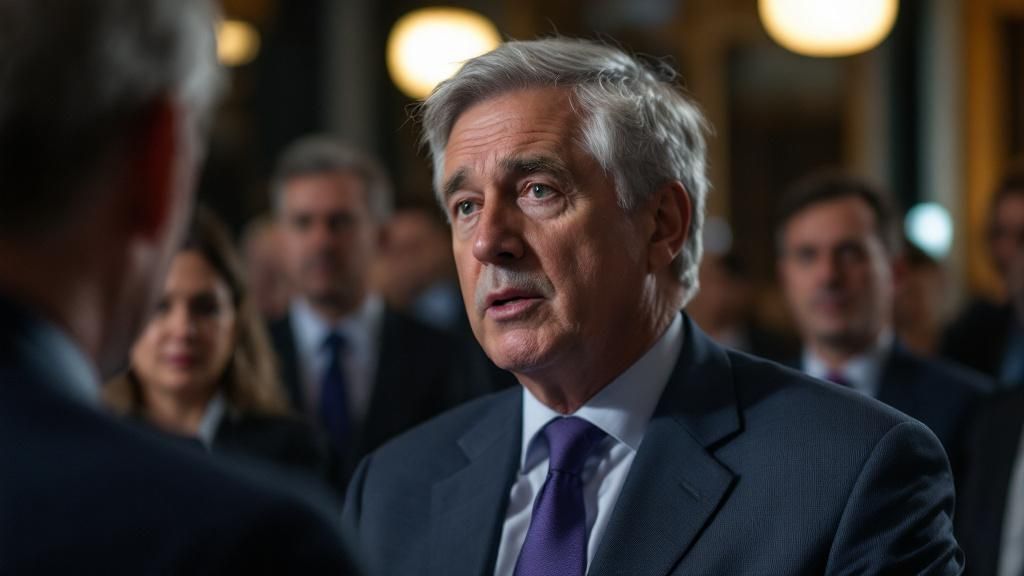
As families throughout the country contend with rising energy bills and price increases climbing to record levels, the opposition figurehead has mounted a fierce attack on the Prime Minister’s handling to the cost of living crisis. In a heated Commons clash, the Labour party has scrutinised the administration’s inadequate assistance schemes, demanding more substantial support to help struggling families. This article examines the intensifying tensions centred on the crisis and investigates the rival visions for economic assistance.
The Opposition’s Criticism of Government Policies
The leader of the opposition has stepped up examination of the government’s response to the mounting cost-of-living emergency, asserting that current measures fail significantly to addressing the level of hardship facing British households. In parliamentary debate, the opposition has presented a thorough analysis covering insufficient financial assistance, limited involvement in energy markets, and a perceived lack of commitment to combating inflation. The opposition maintains that whilst families contend with extraordinary costs, the government’s fragmented strategy only addresses surface issues rather than dealing with fundamental causes of economic hardship.
Central to the opposition’s case is the assertion that the government has fundamentally misjudged both the scale and length of the crisis. Opposition officials have highlighted statistical evidence showing that vast numbers of families now endure genuine difficulty, with many obliged to select between heating and eating. The opposition maintains that the government’s initial response underestimated the crisis’s impact, leading to assistance programmes that turned out to be insufficient when the situation got worse further. This error of judgment, they argue, reflects wider shortcomings in economic prediction and policy planning.
Insufficient Support Systems
The opposition has directly criticised state assistance programmes as inadequate and misdirected, maintaining that fuel cost controls fall short of protecting those on lower incomes adequately. Commentators highlight that whilst the government has introduced different funding schemes, encompassing grants and council tax rebates, these initiatives deliver limited reprieve without resolving structural challenges. The opposition contends that income-assessed support remain overly stringent, leaving out millions of working families who yet contend with escalating prices. Furthermore, they argue the government’s approach lacks the determination needed to address such an unprecedented economic challenge.
Opposition assessment indicates that present welfare systems disproportionately disadvantage families on moderate incomes who sit outside access requirements for targeted assistance. The party has proposed alternative frameworks centred on universal payments, expanded welfare provisions, and state involvement in fuel sectors to control costs. They stress that temporary measures, though beneficial, cannot substitute for deep-rooted transformation. The opposition argues that in the absence of significant law changes and enhanced government funding, families will continue experiencing acute financial strain for years to come.
Long-range Financial Strategic Concerns
Beyond urgent crisis response, the opposition has raised fundamental questions regarding the government’s long-term economic approach and competitiveness. Opposition analysts argue that the existing strategy emphasises short-term political optics over sustainable economic planning, possibly undermining Britain’s future economic wellbeing. They contend that without strategic investment in clean energy infrastructure, manufacturing capacity, and skills development, the nation risks extended economic stagnation. The opposition stresses that managing cost of living difficulties requires wide-ranging reforms addressing productive efficiency, technological innovation, and economic sector development alongside urgent relief measures.
The opposition has outlined concerns that government policy is fragmented across different economic domains, with energy policy, industrial strategy, and fiscal measures functioning separately rather than as coordinated elements. Critics argue this disjointed strategy prevents effective addressing of core inflationary challenges and structural economic weaknesses. The opposition pushes for a integrated strategic framework covering energy transition, manufacturing revival, and skills development. They maintain that real problem-solving necessitates radical policy overhaul rather than incremental adjustments to existing frameworks.
Government’s Defence and Counter-arguments
The government has robustly defended its economic strategy, arguing that the affordability pressures are largely driven by worldwide circumstances beyond direct Westminster oversight. Ministers have underscored the extraordinary scale of the energy shortage, stemming from international tensions and global supply chain breakdowns. They contend that their targeted support packages, covering the price cap on energy and cost of living payments, represent a measured and fiscally responsible approach. The Government Treasury maintains that excessive spending could compound inflation to a greater degree, damaging long-term financial stability and eventually damaging the same families the opposition professes to defend.
Government representatives have stressed the significant monetary support previously allocated, reaching billions of pounds in immediate aid to vulnerable households. They argue that their policies balance immediate relief with disciplined budgeting, preventing the debt spiral that unchecked spending could trigger. Ministers also draw attention to their efforts in strengthening energy independence through renewable investments and supply diversification. The government argues that whilst the opposition delivers sympathetic rhetoric, their proposed solutions are economically questionable and would create unsustainable outcomes without triggering higher taxes or additional debt.
Furthermore, state representatives emphasise their commitment to addressing underlying economic challenges through output gains and corporate investment encouragement. They argue that sustainable recovery demands systemic economic transformation rather than immediate financial relief. The administration believes this approach eventually provides enhanced economic wellbeing and protection for every citizen.
